Guard duty is about as unglamorous as military jobs get. You take a small boat out, drive slow loops around a harbor, and eyeball every fishing skiff that wanders a little too close to the docks. Then you go back out and do it again. It’s boring, it’s repetitive, and it still has to get done, especially when the ships tied up behind you are being loaded with ammunition.
So what happens when there aren’t enough people to do it?
Apparently, you call the Army’s vehicle engineers. According to the Army’s own account of the tests, published November 19, officials at Military Ocean Terminal Concord in California contacted the DEVCOM Ground Vehicle Systems Center (GVSC) in January. They wanted a quick, cheap answer to their staffing problems, and the boats they already had weren’t helping.
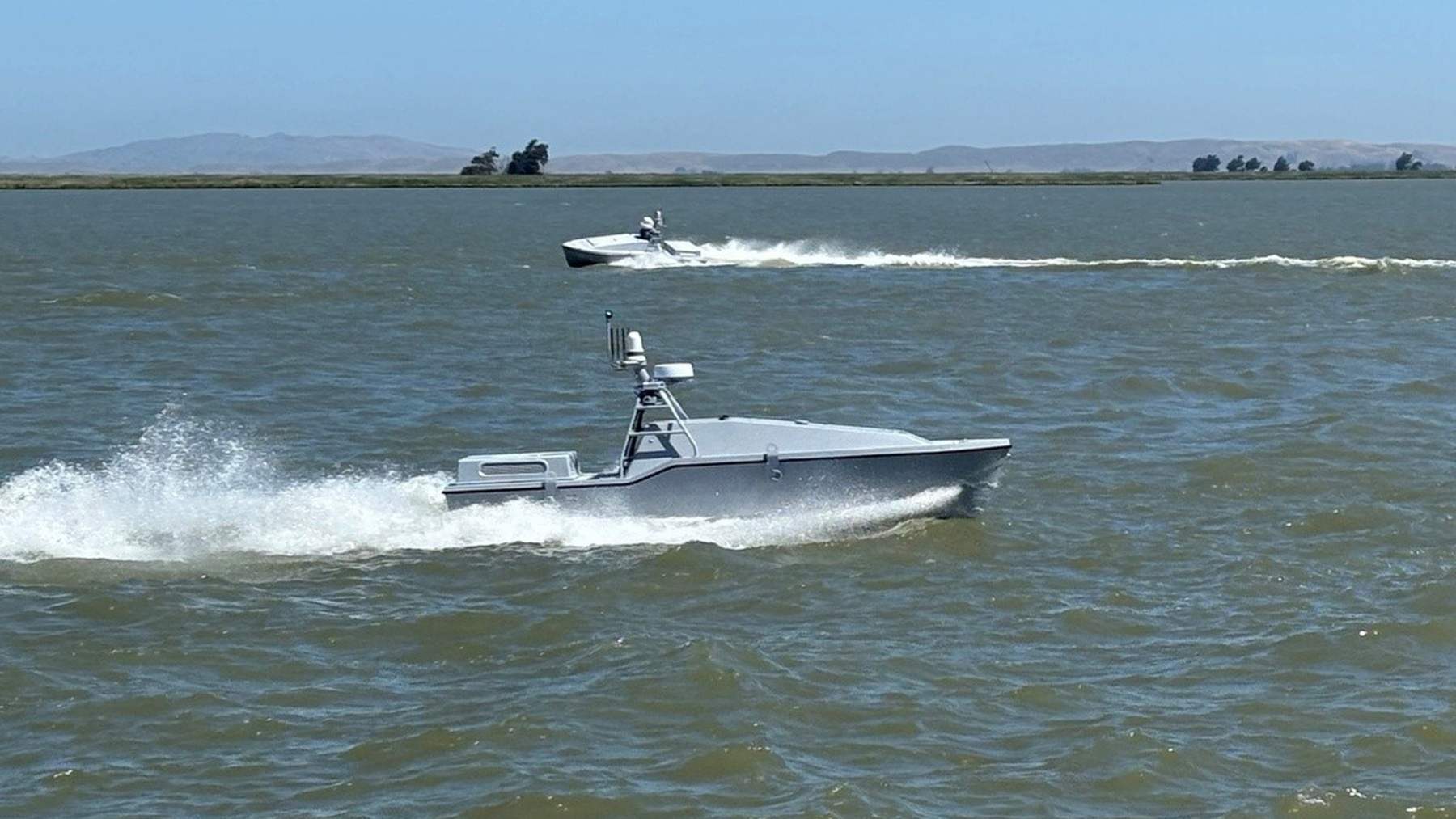
“They had issues with their boats breaking down often,” said Marco Schoener, a mechanical engineer at GVSC. The plan, as he described it, was to add something autonomous that could watch the water for threats. His team picked a 24-foot drone boat, and starting in April it spent several days at a time on the water at Concord and at its East Coast twin, Military Ocean Terminal Sunny Point in North Carolina.
So what’s a military ocean terminal?
Basically, it’s a port the military uses to load equipment and ammunition onto ships headed wherever they’re needed. The Army says both terminals are major hubs for shipping its gear and its strategic ammunition. Which means these are about the last places in the country where you’d want a stranger’s boat drifting around unnoticed.
Concord sits on Suisun Bay, northeast of San Francisco, and it’s run by the Army’s 834th Transportation Battalion. Sunny Point is on the opposite coast.
The security worries aren’t new, either. A Pentagon Inspector General audit of both terminals, released five years ago, found their physical security plans weren’t being reviewed every year the way Army rules require. Military.com’s coverage of that report said staffing and funding shortages were hurting security on land and on the water, and that the California terminal didn’t have enough vessels to cover the water around it. So the shortage Concord flagged in January has been around for a while.
What can a drone boat see?
The boat is Saronic’s Corsair, the same 24-foot model the Navy already operates. Saronic lists it with a 1,000-pound payload, a top speed of more than 35 knots (about 40 mph) and a range of more than 1,000 nautical miles. The company doesn’t publish an empty weight, which is mildly annoying when you’re trying to picture how much boat you’re dealing with.
According to the Army, each boat carries radar and cameras on every side, which gives whoever’s running it a full 360-degree view. GPS and satellite links let operators send it fairly complex instructions. If you’re wondering why it needs both radar and cameras, it’s pretty simple. Radar tells you something is out there, even in the dark. A camera tells you whether that something is a guy fishing or a problem.
That’s the job a crewed patrol boat does now, usually by motoring out to take a closer look. DefenseScoop reported that the Concord demo was set up to show a drone could check out suspicious boats without putting a crewed patrol at risk. My guess is that if drone boats catch on at ports like these, it’ll be as watchmen that handle the hours of looping nobody wants to do, with a crewed boat still heading out when something looks off. That assumes the price works out, and nobody’s published one yet.
Did the boats drive themselves?
That’s where it gets a bit fuzzy. At the May 14 demonstration on Suisun Bay, two of the boats were on the water and the Army says crews on shore ran them remotely. DefenseScoop also reported the boat showed off loitering, obstacle avoidance and control from beyond line of sight. But the Army hasn’t said whether the boats ever ran on their own, how many it used at Sunny Point, or what any of it cost.
Frankly, steering from the shore isn’t a knock against the idea. If your problem is not having enough people to put in boats, a crew sitting on land instead of bouncing around the bay is arguably most of the fix already. I’d still like to know how much of the driving the software was doing, though. Schoener told the Army the system learns as it goes and gets more reliable every time it’s out. That’s a nice line. It’s also exactly what you’d expect a test team to say.
Is the Army going to buy any?
Nobody’s said. Schoener said the boats can be developed further if the Army wants them to be, and that his team will use what it learned, plus the feedback it got, to work out what the Army might want from Saronic next. That isn’t a purchase order, but it isn’t a no either.
The brass has at least seen it. DefenseScoop reported that people from the Army’s research command and the 834th briefed U.S. Transportation Command leaders, including Gen. Randall Reed, at Concord on June 2. The same report said the demo made the boat look like a better match for jobs the Coast Guard has legal authority over, like port security, which is a pretty interesting thing to come out of a test the Army ran.
We’ve seen this hull stick around after a tryout before, when 24-foot drone boats stayed on patrol in Panama after an exercise. And if you want the much smaller end of the same idea, there’s the 340-pound solar drone boat working in Texas.
The Corsair might not be the last hull to show up at these docks, either. In its November 19 account of the spring tests at Concord and Sunny Point, the Army says GVSC plans to try other types of drone boats, with an eye on covering port security and surveillance at a much bigger scale.