
I’ve been waxing lyrical about the Hyundai Santa Fe and Hyundai Palisade for quite a while now. They’re both on my shortlist of vehicles I recommend to people with families and regular incomes who are in the market for a new SUV. Along with the Palisade’s cousin the Kia Telluride.
The award winning Palisade and Santa Fe are both reasonably priced, packed with modern tech, have very comfortable interiors, drive well, and get outstanding fuel economy if you pick up a hybrid. They also look fantastic. Hyundai embarked on a new direction with the current model of Palisade which debuted at the New York International Auto Show a few years back. It’s a bold, retro-futuristic, design which was an absolute breath of fresh air compared to the rounded, generic, blobs everyone had been wheeling out for a decade or two previously.
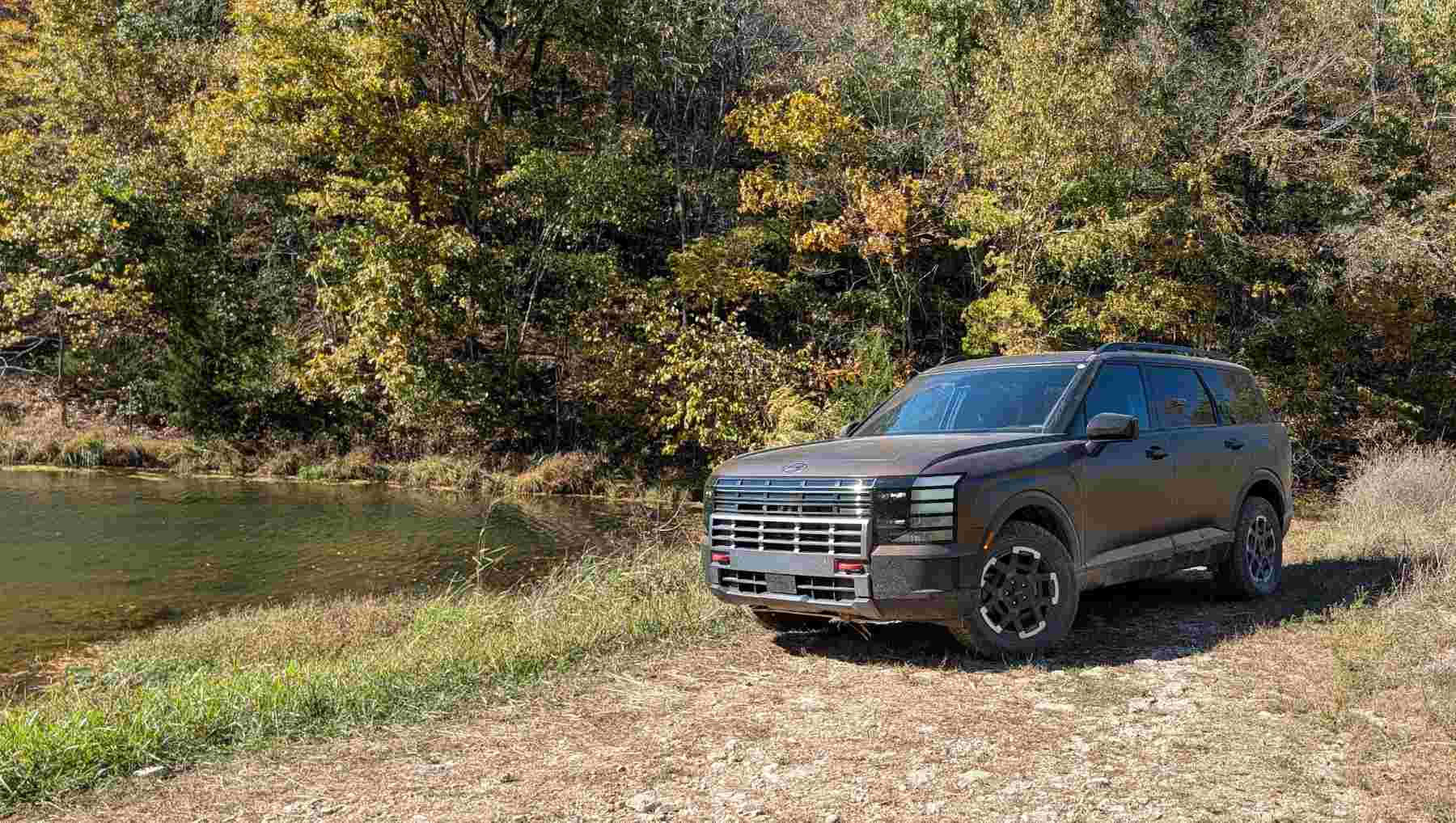
I had a Palisade out for review last year, and they sent me the XRT model. Which is nice and all, but a bit useless in Upstate New York where the off-roading options are less than brilliant. It felt like a bit of a waste. So naturally, when Hyundai invited me to go off-roading in Missouri behind the wheel of a couple of XRTs, I felt I could finally give that Palisade a proper look.
What is Hyundai’s XRT trim?
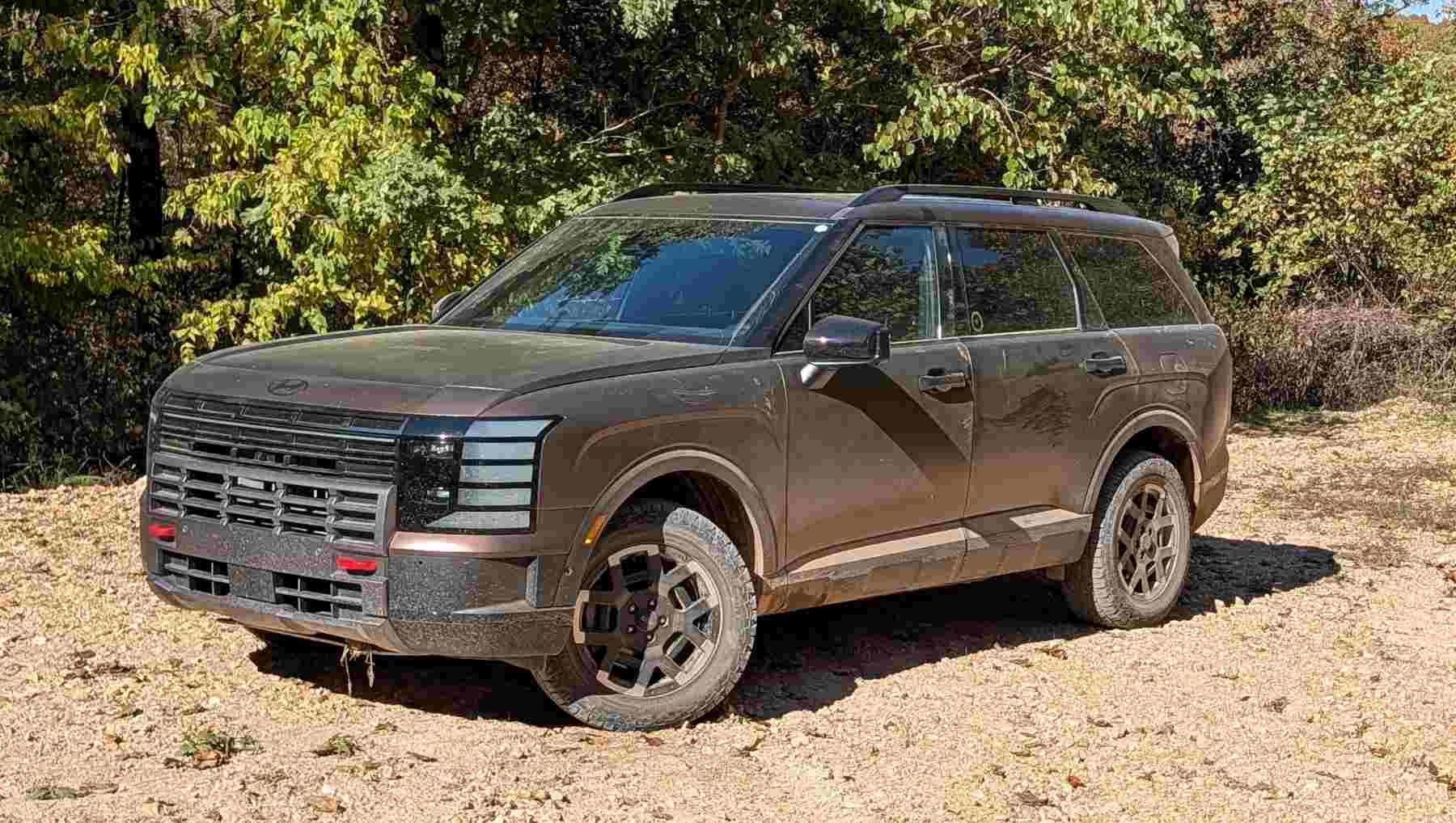
When it comes to Hyundai trims, the XRTs (Or “Extreme Rugged Terrain”) and XRT Pros are best summed up as the “off-roading” models. In addition to some aesthetic changes to both the exterior and interior, the vehicle tends to receive a number of functional upgrades that make life easier off-road. This includes tow loops, all-terrain tires, lifted suspension, upgraded shocks, a limited slip differential, and additional off-road tech.
There are trims from other manufacturers that can go a little further. However, Hyundai’s XRT and XRT Pro trims are pretty consistent with many competitors when it comes to off-road offerings.
You also have to factor in cost. Hyundai could obviously take things further, but the price tag is going to increase with that. As with many of its contemporaries, functionality has been balanced against sticker price to keep vehicles like the Palisade and Santa Fe within a reasonable price bracket. There’s no point in going wild and building the best off-road Palisade you can if no one actually buys it afterwards. With this being said, Hyundai is still looking to develop its off-road offerings, and big things may be on the horizon. More on that later.
The Hyundai Santa Fe is tougher than it looks
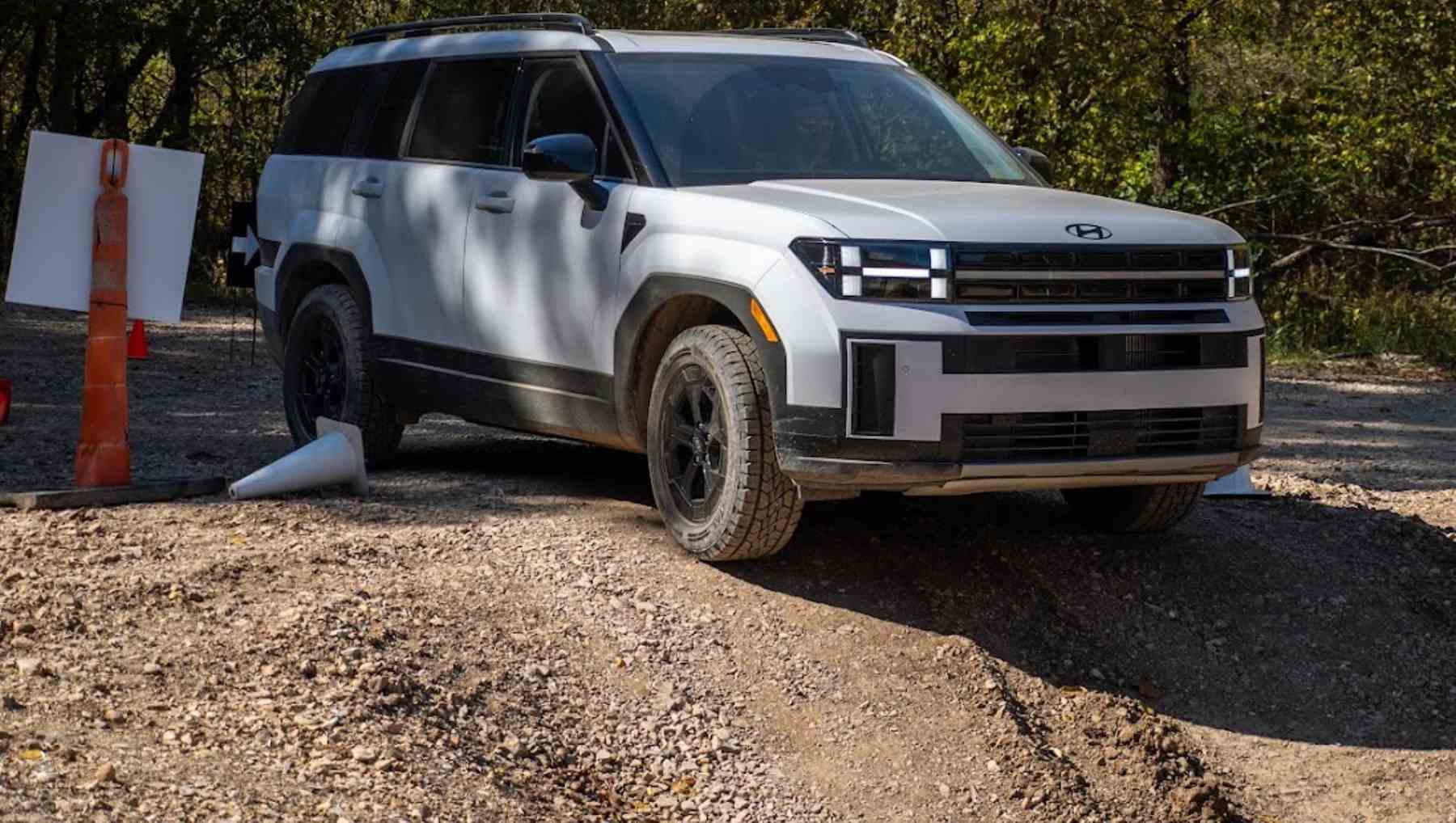
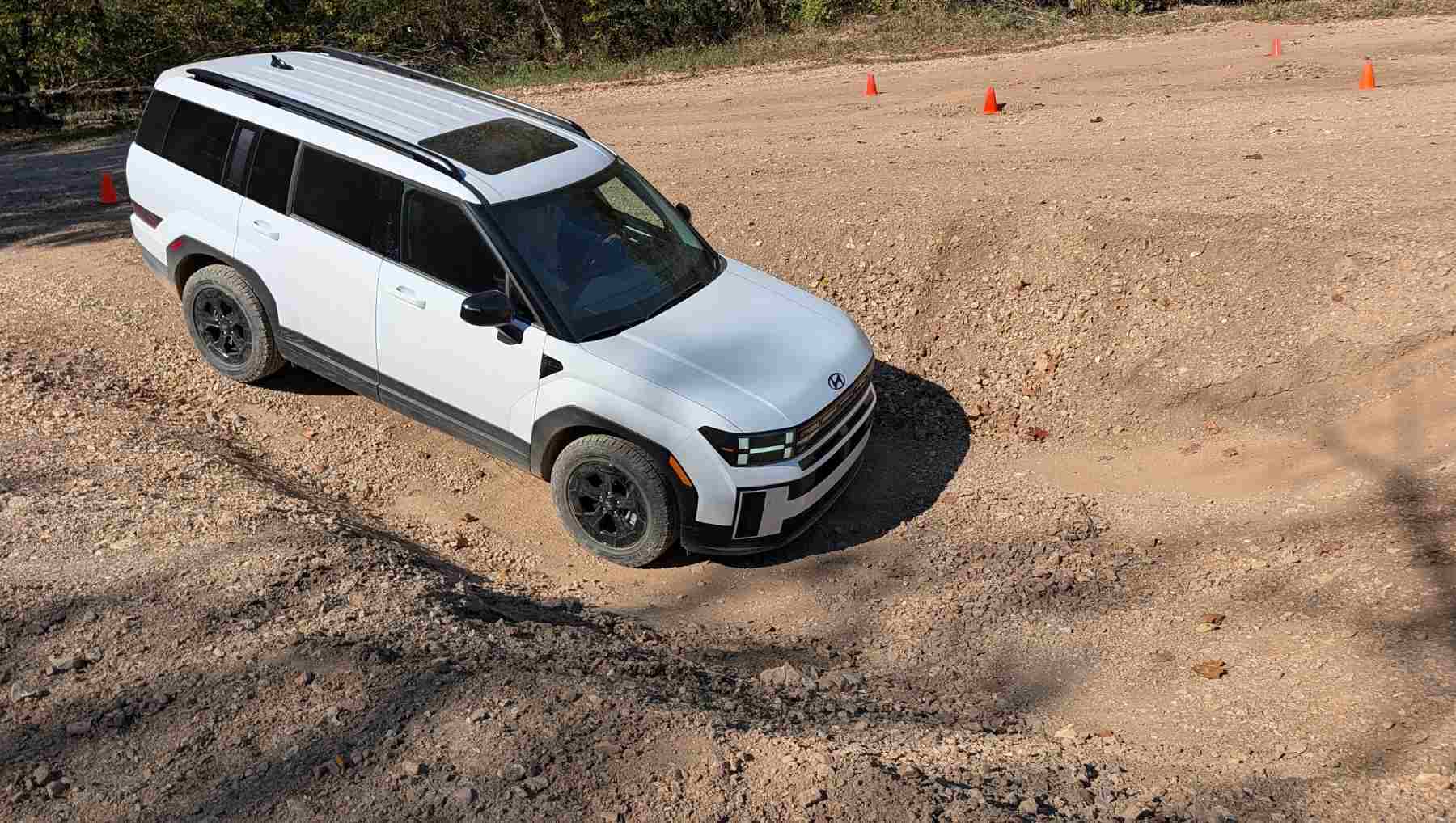
I went into this trip thinking it was all about the Palisade XRT. So it was a bit of a surprise to see several Santa Fes available, and even more of a shock when I got one on an off-road course. If you showed me the off-roading loop we were taking the Hyundai Santa Fe around, and then asked which vehicles I think could handle it, Hyundai’s mid-sized SUV would not have made the list.
It was climbing gradients a Bronco may have grunted at, riding the walls of what I believe was a dirt bike track, and casually dipping both in to and out of a massive, vehicle-deep, hole in the ground.
During all of this, control was pretty good. It only slid a little when I really threw it into a turn or when I approached said bank without carrying enough speed. On some of the steeper portions I really had to get my foot down to get it up there, but like a powerlifter grunting to complete a rep it struggled to the top every time. This also wasn’t an issue on the non-tree lined bits of course, hitting a bank with a bit of momentum carries the Santa Fe right up it without a problem.
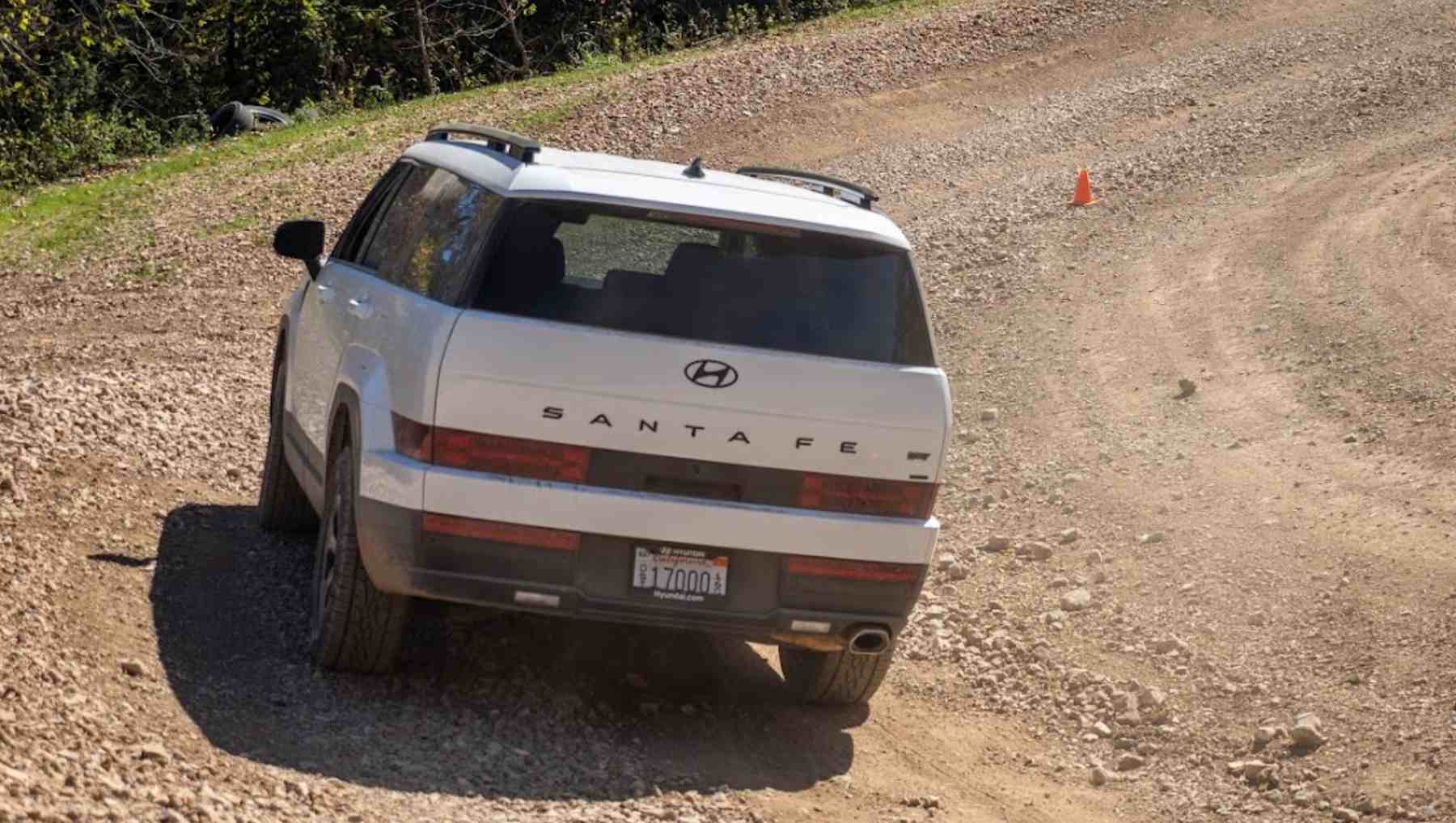
If I had to pick fault, it’s not going to be with the Santa Fe’s mechanics. The vehicle is short a few tech-based features that other Hyundais benefit from. A surround camera and a trail camera are both handy when off-roading.
It’s worth noting that we were asked to use “sand” mode on all of the trails. Like most driving modes, it affects the power going to the vehicle’s wheels, throttle response, and may impact the amount of wheel spin an electronic limited slip differential allows where applicable. Either my drive partner or I also messed up at one point and put a vehicle through a bit of an off-roading course in Hyundai’s standard drive mode and it still did absolutely fine.
This was one of the most intense off-roading sections I’ve ever put a unibody vehicle on it. It made certain other manufacturers look like absolute cowards. Fair play to the Korean manufacturer for rolling the dice and actually putting us in a situation where the vehicles are pushed to their limits.
The Hyundai Palisade is a solid choice for moderate off-roaders
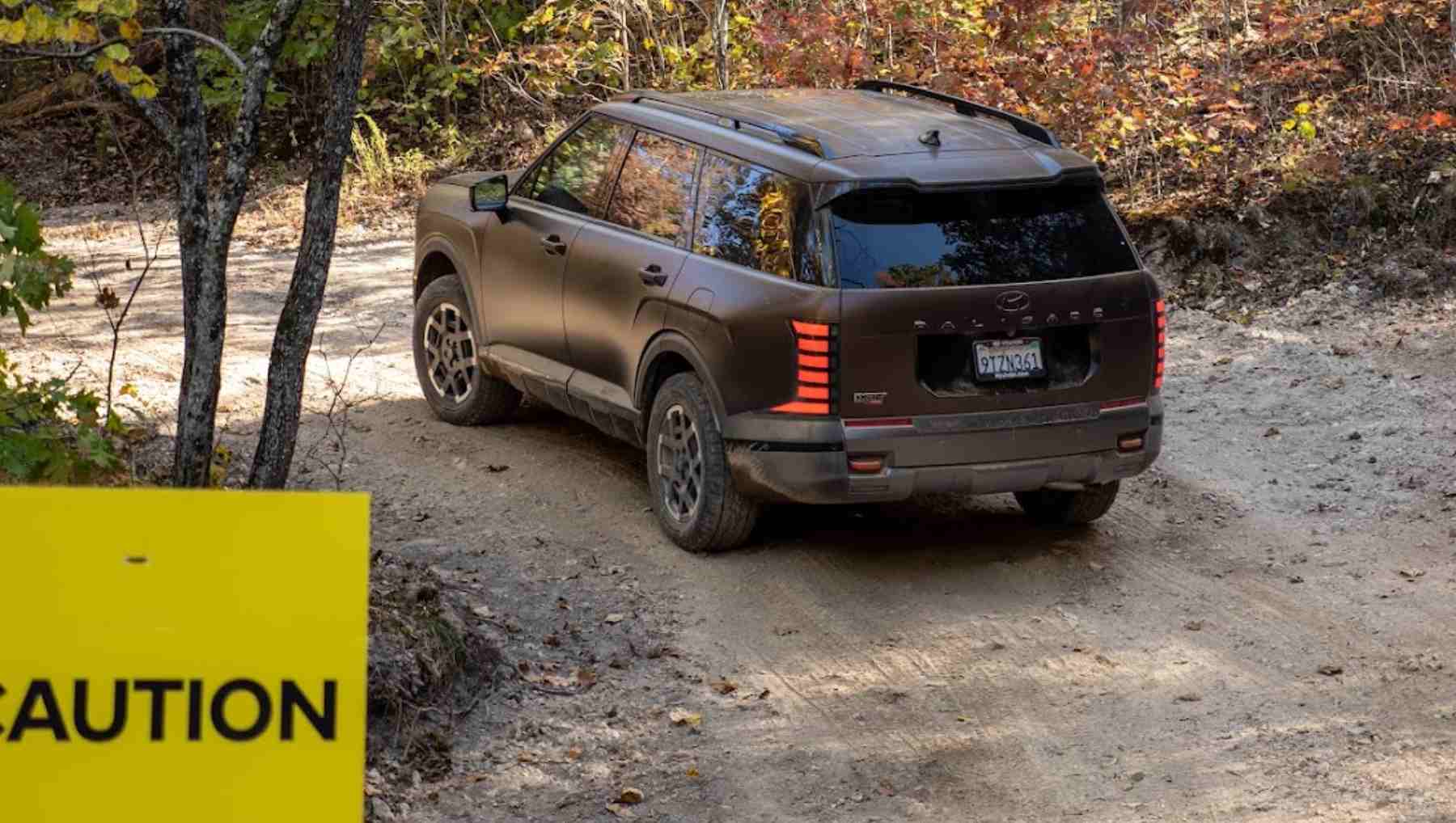
While the Santa Fe surpassed all of my estimations, the Palisade is still obviously a better off-roader. Shockingly, the difference in ground clearance between the two is negligible. Both receive a factory lift from Hyundai, which boosts the Palisade to 8.4 inches of clearance and the Santa Fe to 8.3. Just a 0.1 inch difference, though both are around an inch higher up than their non-XRT equivalents. Despite the boost, the lift doesn’t really affect on-road comfort too much.
While the difference in ride height may be tiny, the Palisade does beat the Santa Fe out in all other departments. In terms of approach and departure angles, the Palisade XRT offers 20.5 degrees and 22.4 degrees respectively, while the Santa Fe boasts an approach angle of 19.3 degrees and a departure angle of 21.8 degrees. However, the shorter wheelbase of the Santa Fe does give it a better breakover angle of 19.1 degrees, as opposed to the 18.8 offered by the Palisade.
The Palisade’s armored skid plate also does a great job. A quick look underneath one showed that it had been through a lot during the two or so days it had spent in the hands of a bunch of automotive journalists let loose in the wilderness. But it seemingly took those hits well, did its job, and protected the vulnerable parts underneath from damage.
In terms of technology, the Palisade is equipped with an electronic rear limited slip differential, which the Santa Fe does not have. The trail modes are also more developed on the Palisade, with both a trail camera and a surround camera available. The omission of these on the Santa Fe was a bit of a surprise, and is arguably a limiting factor when off-roading. Especially without a spotter.
There were two loops on the trip, and the “exit” to the ranch we were on involved going through one of the most challenging parts of the second loop, which seemed to mostly follow a “Jeep Trail” through a dense forest. So even the pristine, 700 miles on the odometer, road-going XRTs we were given for the commute had to get their wheels dirty. They passed with flying colors.
According to Hyundai, the best is yet to come
Before actually getting to put the vehicles to the test, we all sat through a presentation outlining some of the features on offer and giving a bit of background on the XRT badge as a whole. Basically it started out as a rugged-looking trim option a few years ago, and has evolved into a pretty practical all-terrain setup since.
I’m not going to lie, there’s still a long way to go if Hyundai wants to compete with the big boys on the serious end of the off-road Spectrum. Hyundai knows this too, and is actively looking in that direction.
A big step would be a body-on-frame vehicle. While the Boulder concept was striking enough to hit the headlines for other reasons, its underlying structure was really the big news there. If you’re taking something rock crawling, or pushing it through other high-risk off-roading environments, body on frame construction is sort of non-negotiable.
There are other areas where Hyundai could give its XRT lineup a boost too. Locking differentials are obviously a big advantage. The ability to customize vehicles (and a large enough aftermarket to make customizing them tempting) would also be a big boost to XRTs on the whole. Hyundai hinted that it is looking in this direction, but it may take a growing “XRT community” to drive things along.
So, should you get a Hyundai for off-roading?
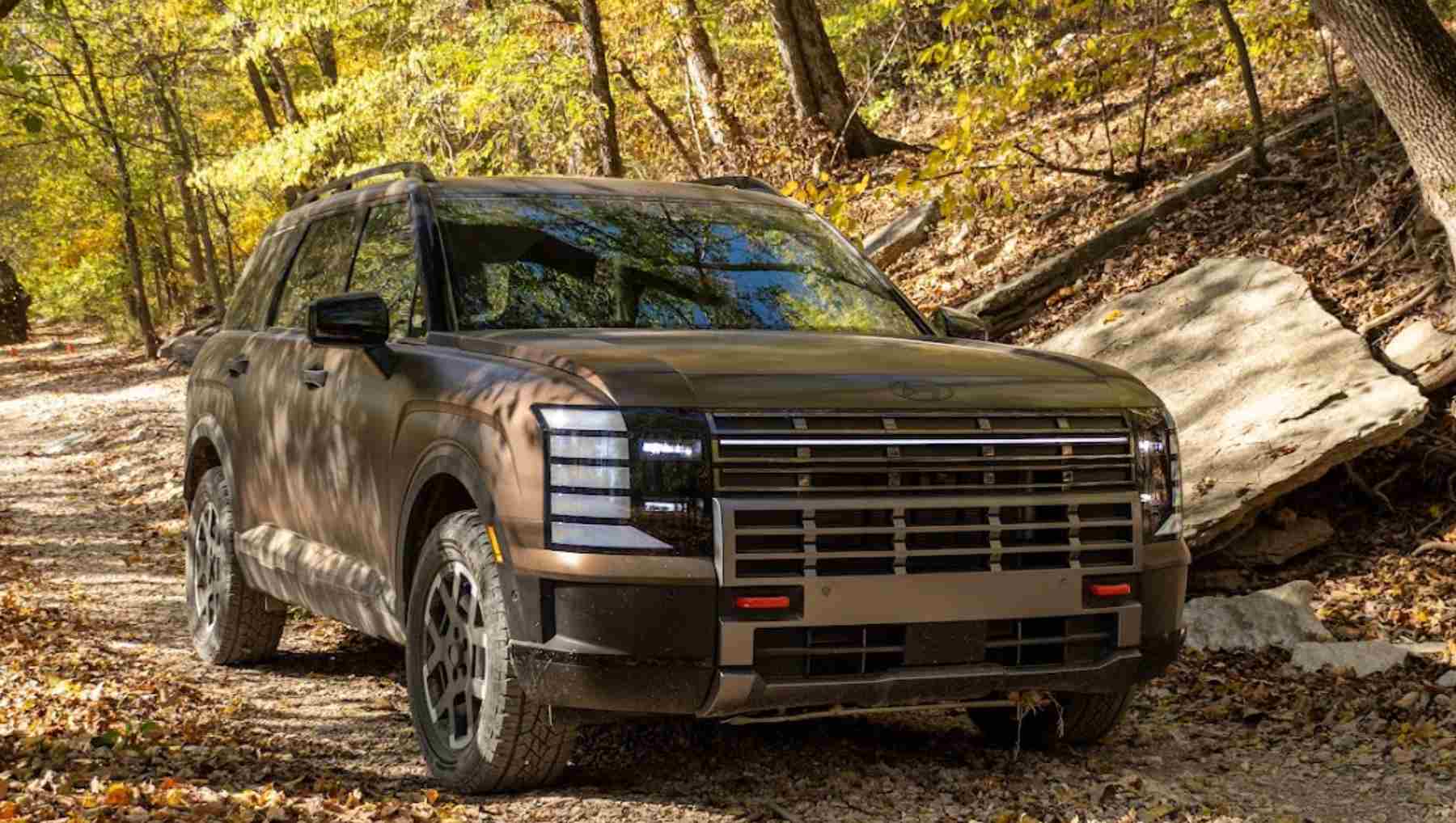
If you engage in mild to moderate off-roading from time to time and want a frankly excellent daily driver that can also handle that,or if you have an interest in overlanding, or if you live rurally and deal with gravel roads, forest trails, and dirt tracks regularly. You should probably take a good look at Hyundai’s XRT trims.
I’m not going to recommend taking either of these vehicles to Moab. But I wouldn’t recommend a Range Rover for any of that either. Or a Subaru. The statement I opened this article with also still applies, a Palisade or a Santa Fe is a great buy for the average family looking for a comfortable, affordable, three-row SUV.
There is one caveat though. While the XRT trims do significantly boost the vehicle’s off-roading ability, I would really consider how much you’ll be “off roading” when you buy one. The Calligraphy trim of both vehicles is far more comfortable, is styled better, and offers better fuel economy (especially if you go for the hybrid powertrain). If you’re only driving around in dirt once a month in the summer, picking the comfier option as a daily driver is sensible. But, as I said, if you spend a lot of time off the beaten path you shouldn’t underestimate an XRT.